Sixgill Shark Sighting & Video - Alki Cove 2

January 19th, 2007

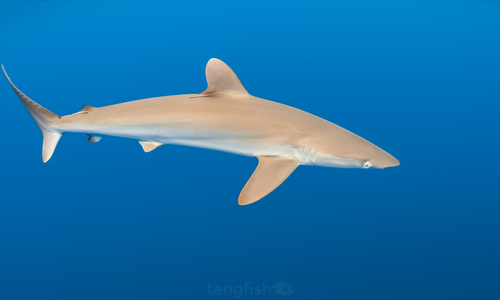
Last night a few dive buddies and I went diving at Seacrest (Alki) Cove 2. The dive started as a ho-hum dive, not much to see and one of our buddies didn’t have enough weight so he turned back and the rest of us descended. It was relatively poor visibility for this time of year, mostly due to the harbor seals that were zooming around and stirring things up. At around 100fsw or so I turned around and was shocked to see a 14-foot Sixgill shark, about a dozen feet in front of me. I fumbled for my trusty Casio EX-Z1000 and flipped it into video mode to catch a few minutes of the prehistoric looking shark swimming slowly and gracefully before sinking down to the bottom - apparently strange behavior for a shark of this type. (I know it’s crappy flash quality, see the link at the bottom for the original footage)


After posting the video to Northwest Dive Club, I found out some interesting info from our resident Puget Sound experts John Rawlings (Advanced Diver Magazine) and Scott Boyd (Emerald Sea Photography):

  • The shark in the video is a mature female and was *not* tagged, meaning that she is not a regular at the feeding station beneath the Seattle Aquarium.
  • Female Sixgills are typically larger than males.
  • The largest ever captured was 16′ in length, despite other (likely erroneous) reports that they can reach up to 26 feet in length.
  • Average size is 8 - 12 feet.
  • Males reach sexual maturity at around 11 feet in length, and females at around 14 feet.
  • Sixgill sharks are found around Puget Sound year round, although far more of them are seen here in the summer and early fall. It is believed that the sharks come into shallower water at that time to breed and pup.
  • Males have a pair of what are called “claspers” located in the anal area. Basically, they are used to transfer sperm to the female and some people refer to them as “penises”, which is not correct.
  • They basically resemble two elongated sausages with pointed tips. The claspers appear to be joined at their base but then are clearly seperate. They do not “hang” or “dangle” beneath the shark, but instead are flush with the shark’s lower belly area and are streamlined with its body.

More information on Sixgill sharks here.

Original high-resolution Sixgill shark footage. (183MB)

Entry Filed under: Puget Sound, SCUBA


Calendar

January 2007
S M T W T F S
« Nov   Feb »
 123456
78910111213
14151617181920
21222324252627
28293031  

Most Recent Posts